Extra Professional
Interests and Activities

Romanian painters

The Earth and the survival of our civilization are at great risk in this century, which could be the last in human history. There are several major threats and risks, some from natural causes that are difficult or impossible to prevent, others from human causes as a consequence of scientific, technological, social and cultural developments in human society. There are national and international research centers and institutes devoted to the study of Existential Risks, defined as “those threats that may result in the premature extinction of intelligent life originating on Earth, or the permanent and drastic destruction of its potential for future development”
Such Future Scenarios presents “WHAT COULD HAPPEN IF…”
So there is a degree of uncertainty and likelihood of some of the predictions made by some specialists coming true…
Please note that the data and information in these possible scenarios are at the level of the years in which each of them was realized (2012…2022)
They can be updated by consulting recent bibliographies in each subject area.

On March 16, 2024, we commemorated the 67th anniversary of Brancusi’s death.

In Romania a relatively small number of Brâncuș’s works are preserved, for known historical reasons, summarized in this quote from Ilarie Voronca:

“And suddenly I had the revelation of the creator’s solitude.
He who with his own hands made the world, was grieved to see that it was ungrateful and haughty, turning away from him and forgetting him. But just like any great artist, the creator continues his fantastic labor, without respite and never satisfied. My soul was filled with awe for the divine builder”
;

From an exegetical point of view, Brâncuș’s creation has known an extraordinary discrepancy of opinions.

Brancusi has been associated with the most varied artistic styles starting with Cycladic idols, African statuary, Greek archaic art, then the Egyptian, culminating with the rockets of the atomic age, after having previously been equally related to cubism, abstract art, Byzantine, oriental, Platonic spirituality and, last but not least, Romanian folklore.

This diversity of opinions is particularly evident at the stylistic turning point in the sculptor’s work, namely 1907-1910, the period in which the “Prayer”, “The Earth’s Rise” and “The Kiss” were created.

Many foreign researchers of his work point to elements of inspiration from our folklore (Paul Morand, Carola G., Welcker, Jean Cassou, Herbert Read); others such as Sidney Geist consider these elements to be of secondary value.

Romanian exegesis was oriented, naturally in a way, on the national specificity of Brâncuși’s creation.

These polemics around the work of the great Romanian sculptor seek to emphasize what is Romanian and what is universal in his creation.

His art has, without a doubt, renewed the meanings and orientation of sculpture, and therefore it must be received from the point of view of the cultural confluences that they reveal, which together make up a dialog with universal valences.

For an art lover open to the world of ideas and artistic currents that revolutionize the creation of artists and reshape the criteria of evaluation and perception/understanding of the public, the encounter with Brâncuși’s work is an overwhelming moment, entering a temple about whose symbols and artistic achievements have been written tens of thousands of pages in articles and volumes of presentation and analysis of the cognitive leap made by the father of modern sculpture.

There are authors who have devoted their entire lives to presenting and trying to explain Brâncuș’s works to the general public.

For some of his works that broke new ground in 20th century art, we have drawn on an extensive bibliography.

From these many volumes and pages, I have retained and synthesized what were for me some of the main ideas, in the Lecture Notes from the powerpoint presentations dedicated to the defining works of Brâncuși’s art.

We made these powerpoints on scientific topics that are rarely presented, based on an observation by the well-known scientist Stephen Hawking, who co-wrote “The Grand Design” with L. Mlodinow.

“It amazes me how disinterested we are today in things like physics, space, the universe and the philosophy of our existence, our purpose, our final destination. It’s a fantastic world out there. Be curious.”

I add another poignant formulation by another scientist, Steven Weinberg, winner of the 1979 Nobel Prize in Physics, who wrote, “The first three minutes, a modern view of the origin of Universe” “The effort to understand the universe is one of the rare things that raises human life a little above the level of a farce and gives it something of the thrill of tragedy.”

I dedicate these powerpoints to those who are curious, eager to find out what is currently known about how the world we live in began and how it may end.

Mr. Qfwfq, a very old gentleman, is the narrator and protagonist of stories written by Italo Calvino, collected in the volume COSMICOMICĂRII.

It’s about 13.7 billion years old.

And because he has lived so long and seen so much, he humorously tells us about the evolution, expansion and contraction of the Universe, time and space, stories about the transformation of matter, starting from current scientific notions and knowledge, mainly astronomical…

Due to some restrictions and particularities of the NICEPPS.ro website
where these Powerpoint presentations are hosted,
following the link mentioned for each of these presentations
that leads to the page where it can be found,
it is necessary to download them on your computer to watch them with music and text,
because on the NICEPPS website or on your phone, the music cannot be heard.

Boursier, he landed in Paris in 1861, aged 23.
He met Auguste Renoir, who took him to Barbizon, where he met Millet, Corot and Rousseau.
Il travaille sur le motif, et utilises la technique optique des impressionistes: ombre et lumière par touches de couleur.
De retour en Roumanie, il s’affirme comme un peintre moderne, combining traditional peinture with an impressionistic touch.

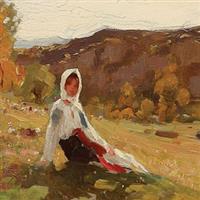
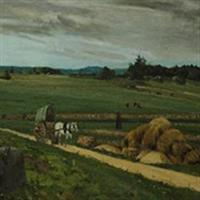
The first in the series of promotion abroad of the great Romanian painters.
“His paintings are real, authentic, entirely in the same sense that an old christ is authentic, with its special script, with its particular ornaments, with its certain style, which cannot be invented by an interested person.
These things were and are, since this painter came to tell us, while so many were scribbling from memory or fantasy, that our country, the country of our people, has this sky, this light, these perspectives.”

In 1878, he arrived in Paris to attend the courses of the Académie Julian.
L’été, he met Nicolae Grigorescu in Barbizon and was immediately influenced by him.
Andreescu is dedicated to painting with a fervor that nothing from his previous attitude seemed to pas l’annoncer.
L’introspection et la tension d’auto-expression ont été attribué la totalité de son art.
“Andreeescu, certainly a more attractive personality than my destiny, has permanently oriented the Romanian Art. ” (Jacques Lassaigne, un des critiques d’art français qui ont traité avec la passion et l’intérêt de l’art roumain). His œuvre contient des paysages, portraits et des natures mortes.

A great Romanian painter whose portraits, landscapes and still lifes show a lot of sensitivity.

Tout en continuant l’œuvre de Grigorescu, la peinture de Luchian is more modern and more serious than that of his maître.
Integrating certain acquisitions of Gauguin or Van Gogh, he developed a lyrical and colorful style.
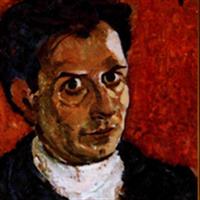
Ses portraits et autoportraits sont parfois dramaticiques et empreints de sentiments douloureux.
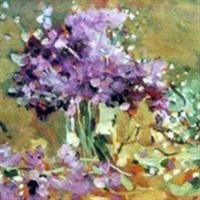
The landscapes and floral compositions are tender and expressive.
Paralysé à partir de 1909, il a eu à vivre le reste de sa vie dans un fauteuil.
Towards the end of his life, Luchian was no longer able to hold the pinceau with his fingers, and he needed to keep working on it.

Luchian’s paintings have a pleasant and delicate coloring at the same time.

L’impressionnisme, le post-impressionnisme, le faste et le mode decoratif de conception d’une composition de la Belle-époque (1900), vont determiner de manière décisive its aesthetic options.
L’équilibre, la sensualité modere se traduisent dans la lumière, dans l’harmonie des tones et des couleurs
La peinture de Nicolae Tonitza is serene and luminous, beyond the daily routine of events.

Romanian painter Impressionism – Post-impressionism

In 1892, Theodore Pallady entered the workshop of Gustave Moreau where he had colleagues Henri Matisse, Georges Rouault and Albert Marquet.
In 1904, he returned to Paris and exhibited at the Athénée Roumain et dans les Salons d’exposition officielle.
He also exhibited at the Venice Biennale in 1924, 1940 and 1942.
Pallady, say: “Peinture, pour moi, est une nécessité douloureuse pour me confesser à moi-même, honnête et impitoyable. An image (disons un tableau, pas une peinture) is a pictorial poem … les lignes, les formes et les couleurs. Il est plus qu’une peinture. Est pensée, le sentiment, l’expression par la peinture…”

On the recommendation of Nicolae Grigorescu, Gheorghe Petrașcu received a bourse pour parfaire à l’étranger.
After a short time spent in Munich, he returned to Paris, where he worked in Bougereau’s studio (1899-1902).
Gheorghe Petrașcu was the founder of an artistic movement characterized by serious, concentrated and evocative colors, objects and images. Il fait, dans sa peinture, un hommage à la réalité.
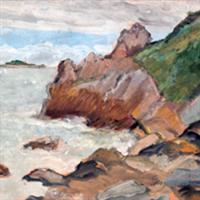
Avec une passion effernée, he paints landscapes in his country Romania, in France, in Spain and above all in Italy.
He received the “Grand Prix” of the “International Salon” in Barcelona (1929) and one in Paris (1937).

Peintre et graveur roumain was formed in Paris.
Returning to Bucharest in 1858, Aman participated in the campaign for the union of Wallachia and Moldavia, carried out in 1859.
Sa peinture est engagée dans le combat pour l’indépendance du nouvel État roumain.
Il est le meilleur peintre d’histoire de son époque ainsi qu’un excellent portraitiste et un bon peintre de genre; ses paysages are devoid of lyrics. Ses gravures à l’eau-forte are evocative.

Founder and director of the Bucharest Fine Arts School (1864-1891), Theodor Aman was, for more than a quarter of a century, the main animator of artistic life in Romania.